Phone:
(701)814-6992
Physical address:
6296 Donnelly Plaza
Ratkeville, Bahamas.

Phone:
(701)814-6992
Physical address:
6296 Donnelly Plaza
Ratkeville, Bahamas.
Products / High & Low Voltage Distribution Equipment
Build the cabinet schedule from the circuit function, system voltage and installation space. Medium-voltage switching and low-voltage distribution need separate specifications; generation or storage interfaces and compact spaces add further design conditions.
Product routes
Review the function and interfaces, then view the equipment or discuss the project requirements.
Medium-voltage switchgear and low-voltage distribution cabinet requirements.
Distribution and control interfaces for generation or storage equipment.
A compact enclosure discussion for a defined distribution function.
Decision guide
Start with the circuit function and equipment boundary; cabinet size or a product photo comes later.
| Cabinet category | What starts the enquiry | What must stay distinct | Project inputs to provide |
|---|---|---|---|
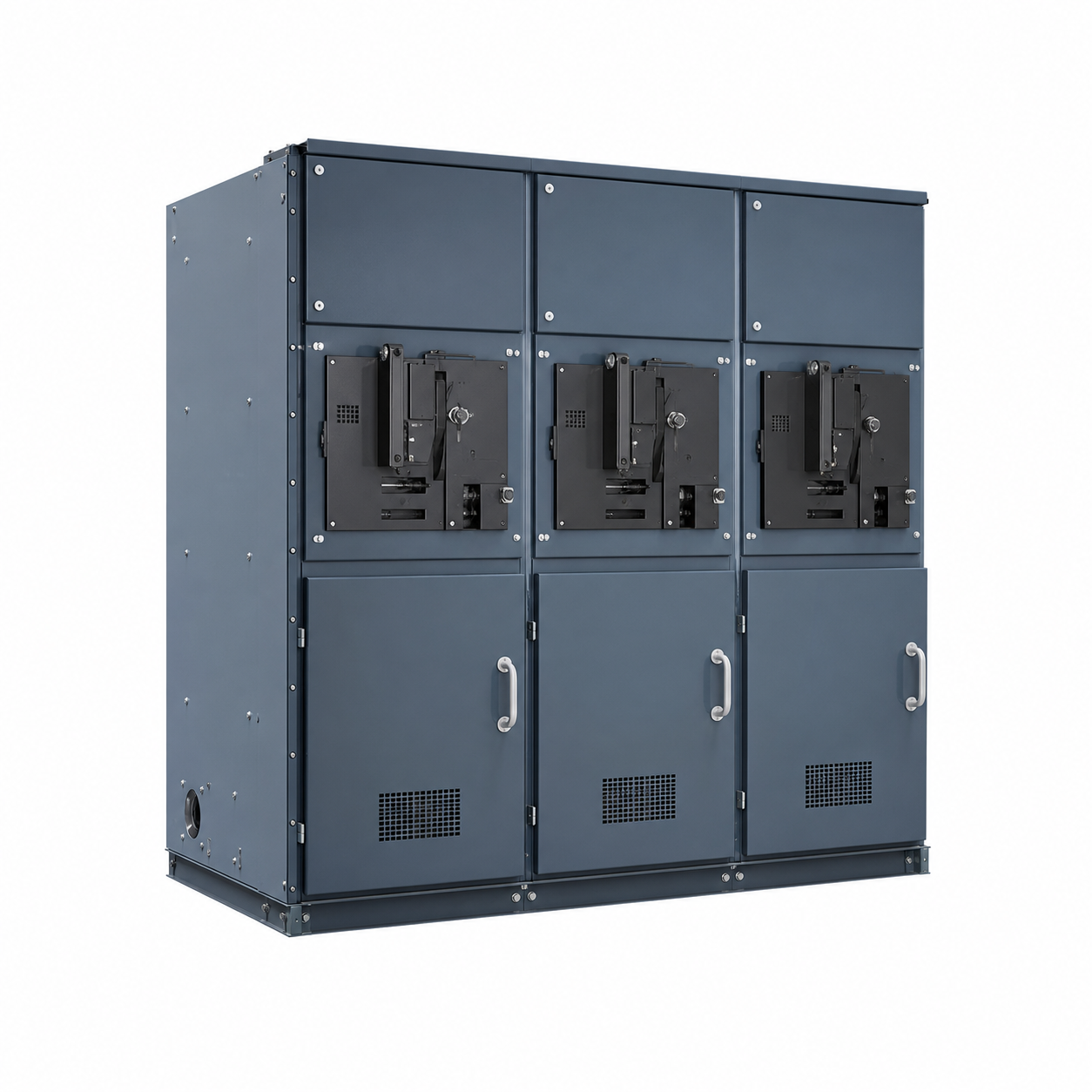
| High & Low Voltage Distribution Cabinet | Defined MV switching and/or LV distribution circuits | MV and LV ratings, protection and cabinet drawings | Single-line diagram and circuit-by-circuit cabinet schedule |
| New Energy Dedicated Distribution Cabinet | A generation or storage interface drives the distribution functions | Whether the plant interface needs a distinct cabinet configuration | Power-conversion interface and protection/control brief |
| Mini Distribution Cabinet | Distribution duty is known but the installation envelope is constrained | Electrical, cable and maintenance fit within the compact envelope | Circuit list, dimensional envelope and cable-entry drawing |
Project sequence
Mark medium-voltage and low-voltage parts of the single-line diagram. Record the voltage, frequency and fault-duty requirements for each section without carrying one section's values into the other.
Identify incoming, outgoing, bus-coupling, control, metering and protection functions as applicable. Give every proposed cabinet a circuit identifier and a place in the scheme.
Specify preferred switching and protection devices, cable entry, busbar interface, installation environment, access and the available room dimensions.
For energy projects, explain the inverter or storage-system interface. For a compact cabinet, confirm clearances, cable bend space and maintainable access against the actual proposed equipment.
A useful schedule names each cabinet's system section and circuit function before discussing enclosure size or internal devices.
Engineering inputs
Procurement questions
No. Keep the sections separate in the circuit schedule and in any product parameters. Their switching devices, insulation, protection and fault-duty requirements must be checked for the actual cabinet type and system location.
Give it a circuit reference, incoming or outgoing function, system section, required switching or protection device, metering or control duties, and the intended cable entry. The single-line diagram shows how those lines connect.
State the functional units, access and maintenance method required by the project. The construction choice should then be checked against the circuit schedule, room arrangement and actual cabinet design rather than inferred from a general family name.
No. First define the power-conversion output, feeder functions, protection, control and monitoring interfaces. Those requirements determine whether a conventional or project-specific cabinet arrangement should be assessed.
No. The circuit devices, cable bend and termination space, access for operation and maintenance, thermal conditions and enclosure requirements must all fit within the available envelope.
Along with the new single-line and circuit schedule, send the existing cabinet nameplate, outline and foundation drawings, cable locations and any protection or control connections that must be retained. Physical fit does not establish electrical interchangeability.