Phone:
(701)814-6992
Physical address:
6296 Donnelly Plaza
Ratkeville, Bahamas.

Phone:
(701)814-6992
Physical address:
6296 Donnelly Plaza
Ratkeville, Bahamas.
Products / High Voltage Apparatus
Choose high-voltage apparatus by the electrical function required at the installation point: interrupt a circuit, establish an isolation point, provide a signal for metering or protection, or address an overvoltage risk. Each function requires its own equipment ratings, connections and operating arrangement.
Product routes
Review the function and interfaces, then view the equipment or discuss the project requirements.
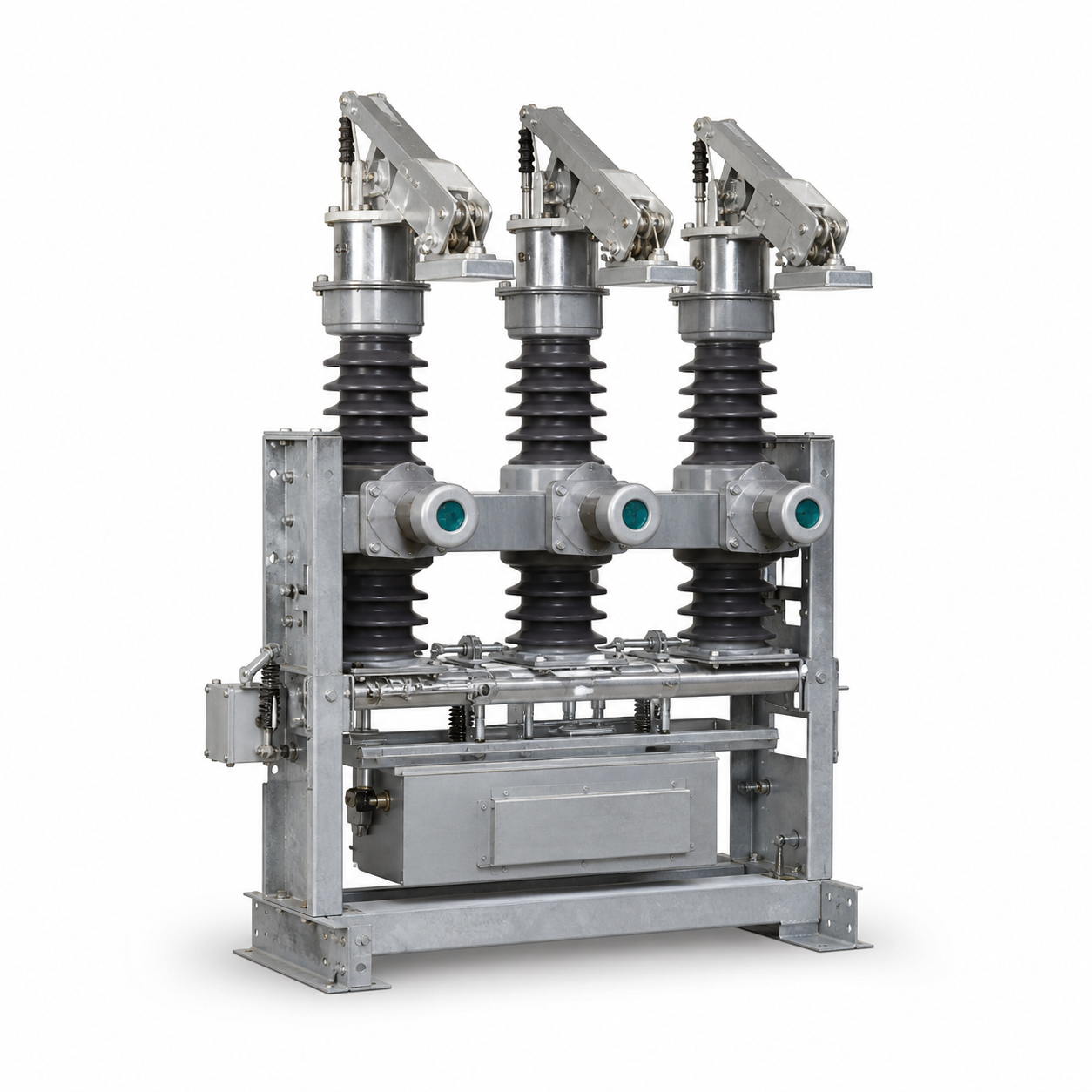
An outdoor vacuum circuit breaker for a defined switching and interruption duty.
An indoor or outdoor isolation-point arrangement.
Current- or voltage-signal equipment for metering and protection.
A surge-protection point in a defined network context.
Decision guide
One installation may need several functions, but each apparatus type answers a different technical question.
| Category | Primary task | Key interface to establish | Selection boundary |
|---|---|---|---|
| Outdoor Vacuum Circuit Breaker | Outdoor circuit switching and interruption | Circuit duty, mounting and protection/control connections | Do not assume interchangeability with an existing breaker without mounting and control checks |
| High Voltage Disconnector | Isolation point in the intended switching arrangement | Location, operating mechanism and adjacent devices | Do not assign a breaker or load-switch duty without a formal device specification |
| High Voltage Instrument Transformer | Current or voltage signal for meters and relays | CT/VT ratio, secondary burden, accuracy and terminals | Do not treat this as a power transformer or assume CT and VT are interchangeable |
| Surge Arrester | Surge-protection point in the network | Protected equipment, system/earthing arrangement and mounting | Do not set a specific arrester rating without network and protection-coordination data |
Project sequence
Mark whether the point requires interruption, isolation, current or voltage measurement, or surge protection. If several functions are needed, list them separately.
Record system voltage and frequency, current or fault conditions where applicable, and the intended protection or metering scheme.
Describe indoor or outdoor location, support structure, mounting clearances, adjacent equipment and cable or conductor connections.
For breakers and disconnectors identify operating and interlock requirements; for CT/VT identify secondary devices and terminals; for surge protection identify the protected point and earthing context.
Equipment that appears in the same bay or cabinet may solve different problems. The device task must be established before selecting a category.
Engineering inputs
Procurement questions
A breaker addresses circuit interruption; a disconnector provides an isolation point in the switching arrangement. Check the single-line diagram, operating sequence and device specifications before selecting either.
A CT supplies a scaled current signal and a VT supplies a scaled voltage signal. Their ratios, connected secondary devices, burden, accuracy and terminals must be specified for the actual measurement or protection task.
No. Include the existing nameplate and installation, terminal and control drawings. Rated duty, mounting, trip and close supply, auxiliary contacts and protection interface all need comparison with the proposed configuration.
State the equipment location and exposure, support or enclosure arrangement, mounting dimensions, access, and connection to adjacent devices. Electrical duty alone does not define the physical installation.
No. Identify the protected equipment, installation point, system and earthing arrangement, and existing protection design. Model-specific rating and performance data must then be checked against that duty.
No. Each apparatus type and model has its own applicable ratings, drawings and test documentation. Request the documents for the exact equipment under consideration.