Phone:
(701)814-6992
Physical address:
6296 Donnelly Plaza
Ratkeville, Bahamas.

Phone:
(701)814-6992
Physical address:
6296 Donnelly Plaza
Ratkeville, Bahamas.
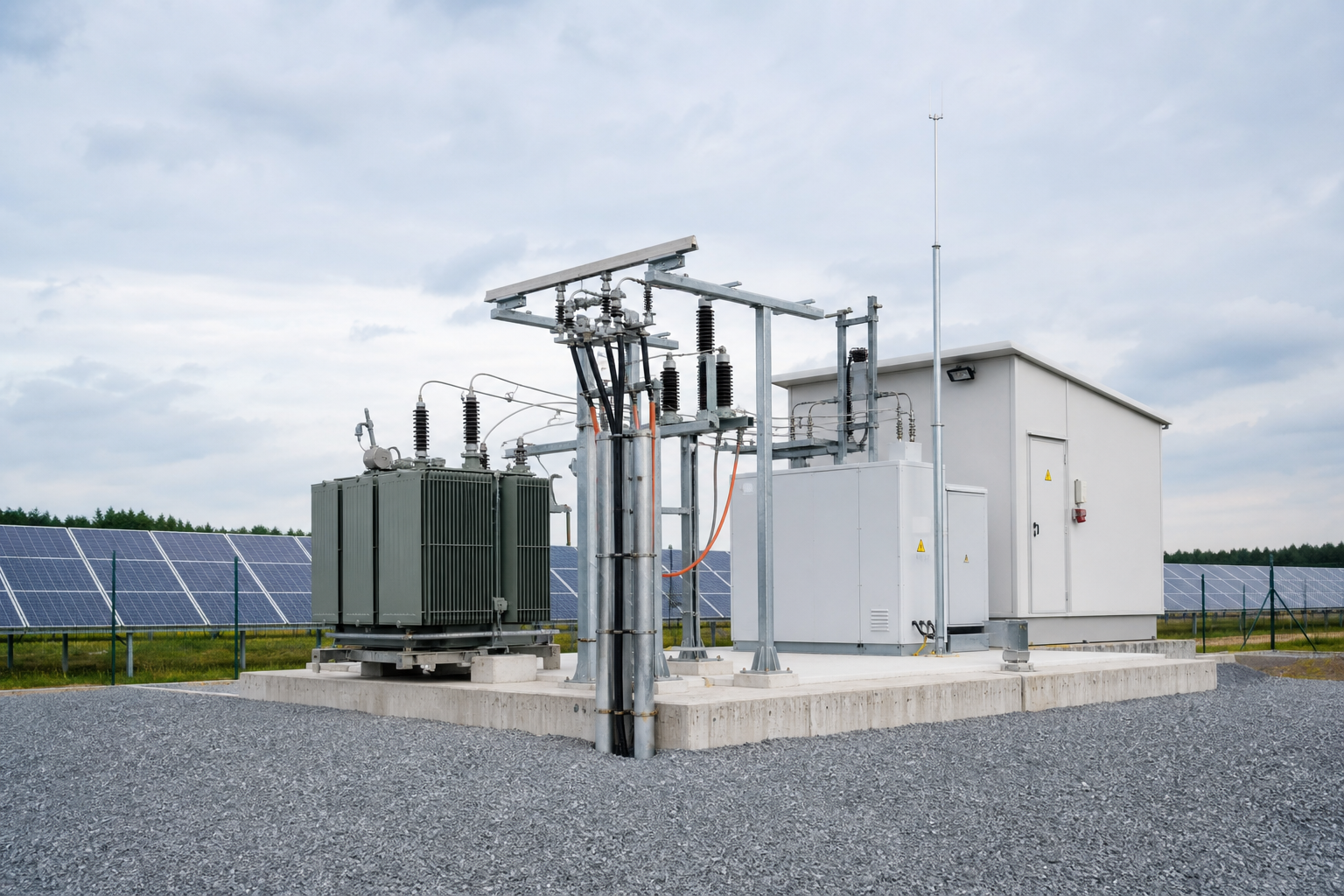
The project information to define before selecting a compact substation for solar and distributed-energy grid connections.
A compact substation can bring transformer and switchgear functions into a coordinated outdoor distribution format. For renewable energy connections, the value is not simply that equipment is prefabricated. The project still depends on the connection requirements, protection approach, cable routes, site conditions and interfaces with the generation plant.
Start with the generation capacity, grid connection voltage, transformer arrangement and the required incoming and outgoing circuits. The project team should identify where protection, metering, isolation and control responsibilities sit before the equipment format is finalized.
When an existing utility or facility network is involved, provide the relevant interface information with the RFQ. This includes the available connection point, protection expectations and any drawing requirements issued for the project.
Compact substations are installed in real site environments. Access for delivery and maintenance, foundation arrangement, cable trench routes, drainage, ambient conditions and exposure all influence the final enclosure and equipment configuration.
For solar and distributed-energy sites, also consider how the substation sits alongside the inverter system, collector cables, communications equipment and future capacity changes.
A compact substation is most effective when its interfaces are resolved before production. Providing the project information at the beginning helps keep the equipment scope, drawings and delivery requirements connected.