Phone:
(701)814-6992
Physical address:
6296 Donnelly Plaza
Ratkeville, Bahamas.

Phone:
(701)814-6992
Physical address:
6296 Donnelly Plaza
Ratkeville, Bahamas.
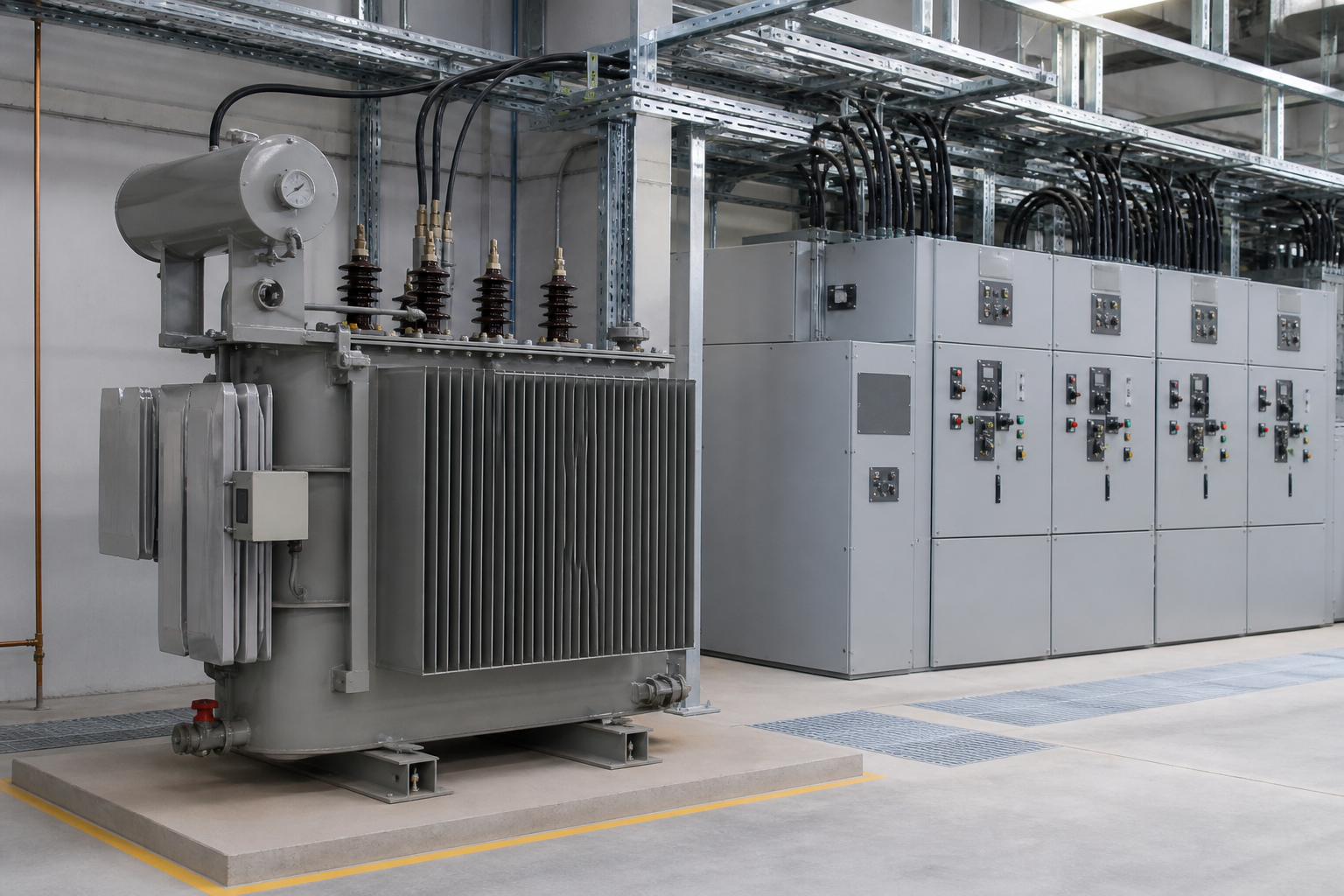
A practical checklist for defining load, installation conditions and switchgear interfaces before requesting a distribution transformer.
Selecting a distribution transformer for an industrial project starts with the operating duty, not a nameplate value alone. A suitable unit has to connect the site load, incoming supply, downstream switchgear, installation constraints and maintenance plan.
Collect the present connected load, expected demand, operating schedule and planned expansion before requesting a transformer proposal. A facility with stable continuous demand is reviewed differently from a site with large motor starts, intermittent process loads or future production phases.
The primary and secondary voltage, frequency, neutral arrangement and required connection configuration should be stated early. If the transformer will interface with a generator, renewable source or parallel supply, include that information in the initial technical brief.
Indoor and outdoor locations create different requirements for enclosure, cooling, clearances, cable entry and access. The project team should also define ambient conditions, ventilation arrangement, elevation, pollution exposure and any local fire or building requirements that affect the installation.
The choice between dry-type and oil-immersed construction should follow the site conditions and the applicable project requirements. It should not be made only from a general preference for one format.
A transformer is one part of the distribution system. Confirm the upstream protection arrangement, downstream switchgear interface, available fault level, cable or busduct route, metering requirements and earthing concept together. This avoids a transformer selection that looks correct in isolation but creates unresolved interfaces during detailed design.
A concise technical brief gives the supplier the context needed to review the equipment route. When drawings or an existing single-line diagram are available, include them with the RFQ so ratings and interfaces can be discussed together.