Request a Quote
Share the equipment and project requirements. If you need help selecting a model, describe the application.
Have drawings or specifications? Email [email protected] with your project reference.

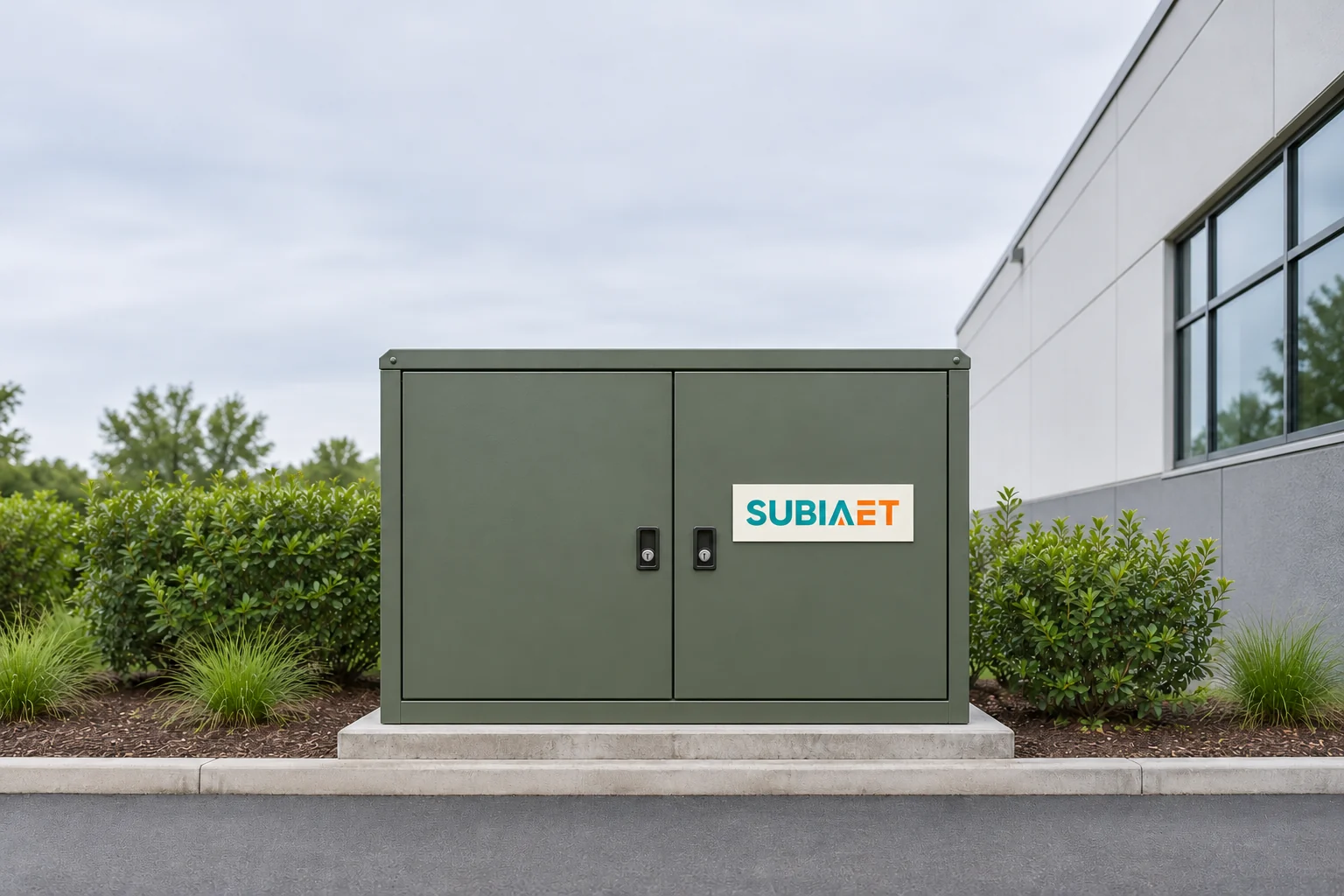
One electrical transformer can carry four type labels simultaneously, and that is not ambiguous — it is accurate. Each label answers a different question about the same piece of equipment. A three-phase liquid-filled distribution unit installed in a pad-mounted enclosure is correctly described by all four terms at once: distribution (function), liquid-filled (insulation), three-phase (phase), and pad-mounted (installation). These labels describe different properties; one does not by itself establish the others. Understanding this four-axis structure lets you read a nameplate, write a specification, or navigate a product catalogue without conflating separate properties.
The four classification axes answer separate questions. Knowing the insulation type does not establish the phase count, and an installation label alone does not fully describe the electrical duty. Some labels within an axis can also overlap: an indoor unit can form part of a substation, and a distribution unit may have an isolation duty. Each question needs an answer, and the combination produces a useful description.
| Axis | Question | Sample labels | Commercial site distribution example |
|---|---|---|---|
| Function | What job does it do in the circuit? | Power, distribution, isolation | Distribution |
| Insulation | What medium surrounds the active parts? | Liquid-filled, dry-type | Liquid-filled |
| Phase | What supply arrangement is it designed for? | Single-phase, three-phase | Three-phase |
| Installation | Where and how will it connect to the system? | Pole-mounted, pad-mounted, substation, indoor | Pad-mounted |
Consider a commercial site receiving medium-voltage supply through underground cables, with a three-phase load and a site design that calls for liquid-filled construction in a pad-mounted enclosure. That single piece of equipment earns all four labels correctly and simultaneously. Eaton’s medium-voltage transformer guide describes both single- and three-phase pad-mounted distribution units alongside liquid-immersed substation construction and ventilated dry-type variants, showing that pad mounting is a connection and enclosure arrangement rather than an indicator of phase count or voltage level.
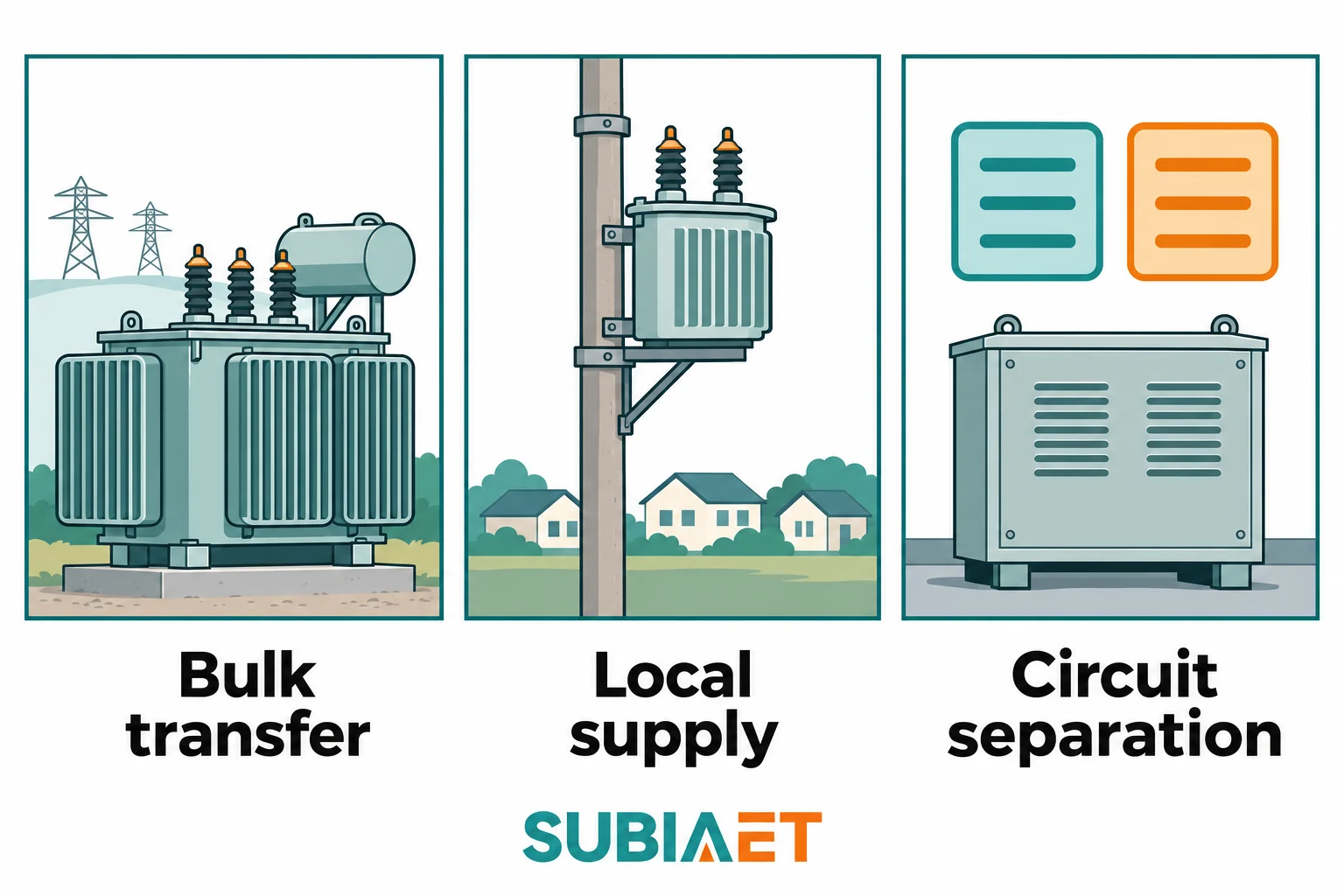
Function describes the duty the transformer performs in the power system, and several distinct duties exist.
Bulk power transformation moves large blocks of electrical energy between voltage levels at generating stations, transmission interfaces or major substations. A transformer in this role is often called a power transformer in commercial practice. Its system role, rather than a universal size threshold, distinguishes the example from local load-serving distribution.
Local distribution commonly reduces medium voltage to the utilisation level required by downstream users — building electrical panels, industrial equipment, or residential services. This is a familiar load-serving duty in facility and site electrical work. Hitachi Energy’s distribution overview describes the distribution role as reducing medium voltage for downstream users, and notes that the range extends from small single-phase pole units to larger three-phase equipment. Importantly, distribution duty is defined by grid position and the job being performed, not by a fixed voltage or kVA threshold. The same manufacturer also groups dedicated renewable step-up applications within its distribution range — which demonstrates that step-up and step-down describe only voltage direction, not a separate equipment class or exclusive functional category.
Electrical separation (isolation) is a third distinct duty: providing a galvanically isolated secondary circuit where no direct conductive path exists between primary and secondary. A project may require this separation for a particular circuit or piece of equipment; any medical or other specialized isolation duty brings additional design requirements. A transformer with separate primary and secondary windings can provide this separation by design. A shared-winding autotransformer, where part of the winding serves both primary and secondary functions, cannot provide galvanic isolation because a conductive path exists between the two sides. Whether a specific separate-winding transformer actually meets an isolation requirement depends on the design and applicable standard, not merely on having two windings.
The term power transformer itself has two distinct uses. The public scope of IEC 60076-1:2011 uses it broadly, covering single-phase and three-phase transformers, including autotransformers, with stated exceptions. Industrial and commercial practice often uses the term more narrowly to mean a large transmission or substation unit, distinguishing it from distribution equipment. When you encounter the term, check whether it is being used in the broad standards sense or the narrower commercial sense.
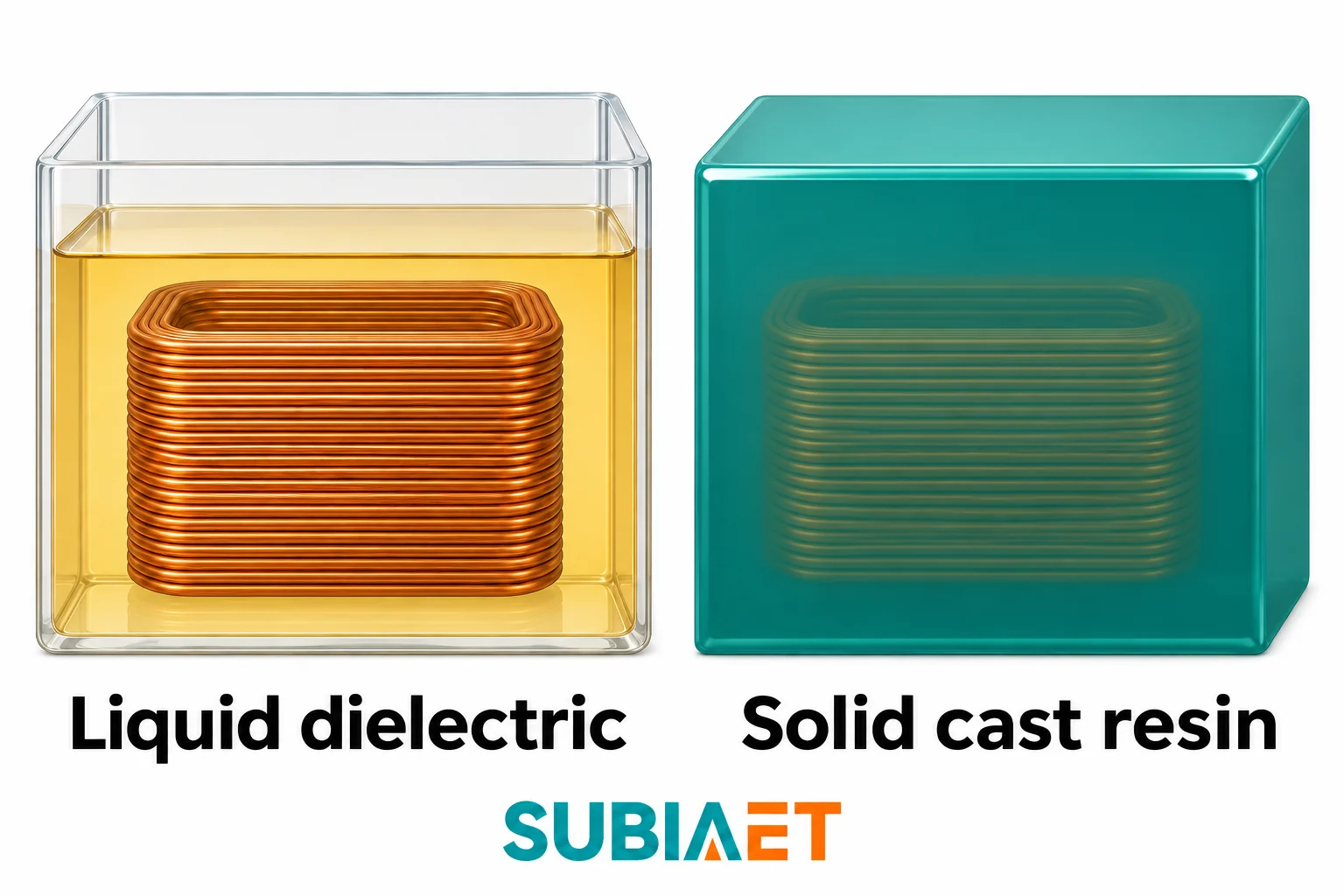
The insulation axis describes the materials that separate energized conductors from each other, the magnetic core and grounded parts. Two broad categories exist.
Liquid-filled transformers immerse the active parts — core and windings — in a dielectric liquid. Mineral oil is one widely used option, but it is not the only dielectric liquid. Natural and synthetic ester fluids, silicone fluids, and other liquids are used in specific applications, particularly where fire resistance or environmental properties are priorities. For a specification, name the actual fluid rather than relying on an informal oil-filled label; different fluids have different properties and design requirements.
Dry-type transformers use solid or gaseous insulation around the windings rather than a liquid. Cast resin (epoxy encapsulated) windings are a prominent example: resin provides solid insulation around the windings instead of an insulating liquid. Ventilated designs allow ambient air to flow through the enclosure; non-ventilated designs reject heat through their enclosure and other designed heat-transfer paths rather than through an open ventilation path. Potted designs embed the windings in solid compound. Ventilation is therefore not a defining feature of all dry-type equipment — a dry-type transformer can use a ventilated or non-ventilated enclosure, depending on the design and application requirement. Encapsulation and the enclosure’s sealing or ingress protection are separate features.
Eaton’s low-voltage fundamentals describes ventilated, encapsulated and non-ventilated examples.
Insulation and cooling are related but distinct considerations. The dielectric liquid in a liquid-filled transformer also circulates heat away from the windings, but the transformer may use natural convection alone or assisted cooling (fans, pumps, radiators) depending on the rating and duty cycle. A dry-type transformer must reject heat by other means — convection through air gaps, conduction into the enclosure, or forced-air cooling — but the choice of cooling method is separate from the choice of insulation medium. Detailed selection between liquid and dry insulation for a specific site involves fire risk, environmental exposure, maintenance access, and cost, and deserves its own analysis beyond this classification discussion.
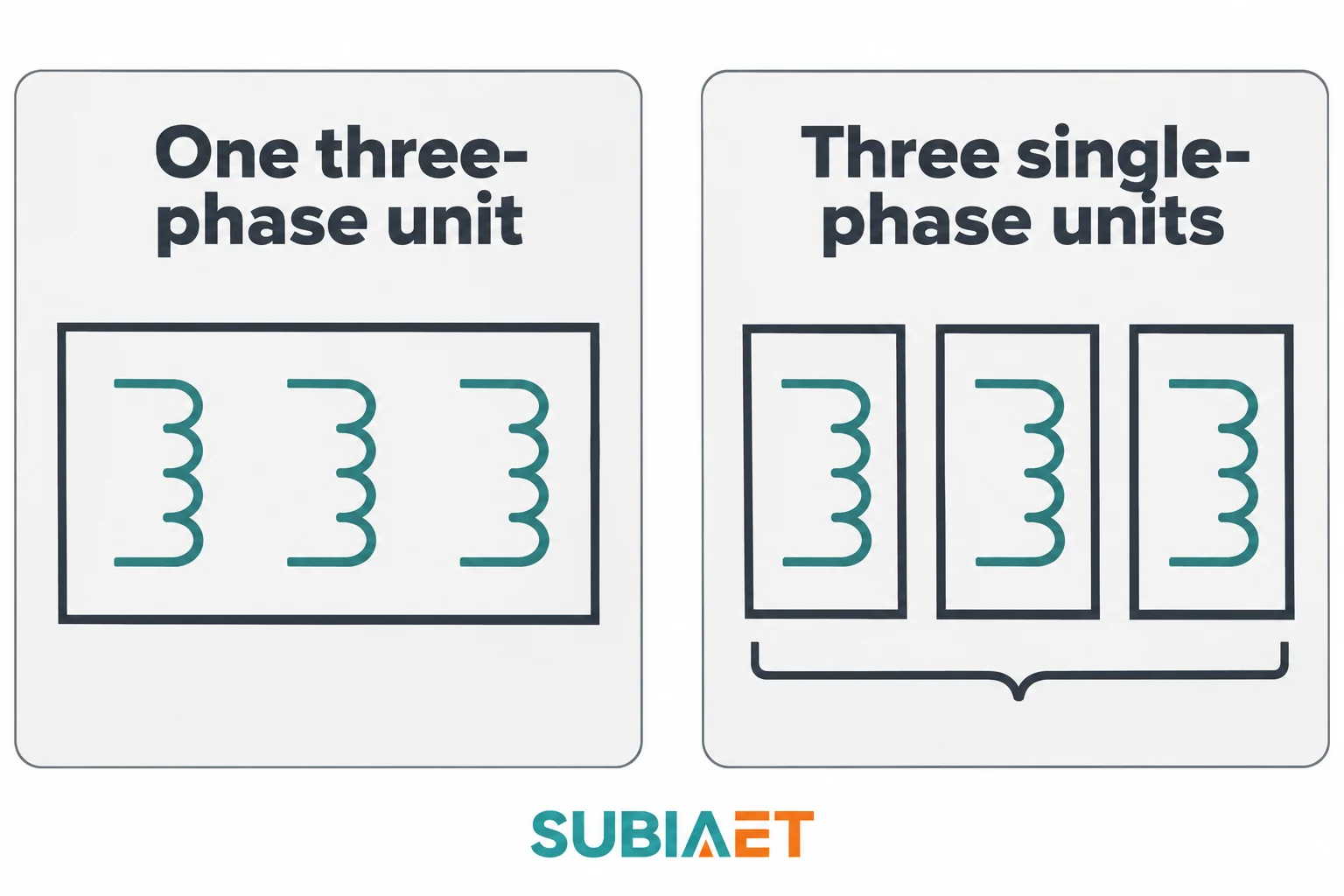
A transformer is designed to operate on either a single-phase or a three-phase supply, and this is a fundamental construction characteristic, not something inferred from size or mounting.
A single-phase transformer is designed for a single-phase AC circuit. It can have multiple winding sections, taps or secondary outputs; single-phase does not mean exactly one physical primary coil and one secondary coil. Single-phase units serve residential loads, isolated single-phase industrial equipment, or overhead distribution lines where individual customers connect to one phase of the network.
A three-phase transformer integrates the three phase winding sets in one assembly, often around a shared magnetic core. A liquid-filled design may house that assembly in one tank; a dry-type unit has a different enclosure arrangement. Three phases do not imply three physically independent cores. This is structurally different from three separate single-phase units.
A three-phase bank assembled from three separate single-phase transformers can electrically perform the same voltage transformation as a single three-phase unit, but the two are distinct equipment descriptions. A bank consists of three physically separate units, each with its own core, nameplate and physical assembly, including a tank where the design is liquid-filled. A single three-phase unit integrates all three phases into one assembly. The distinction matters for footprint, sparing strategy, field assembly logistics, and procurement documentation. Eaton’s medium-voltage guide describes both single-phase units and three-phase banks assembled from single-phase units as distinct equipment descriptions alongside integral three-phase designs.
Phase count does not follow from mounting arrangement or apparent size. A pad-mounted enclosure can house either a single-phase or a three-phase transformer. Large single-phase units also exist in transmission applications. Check the nameplate and design documentation rather than inferring phase from physical appearance.
Installation describes the physical location and connection method, which affects enclosure design, cable termination arrangement, access provisions, and site civil works.
Pole-mounted transformers are supported on distribution poles or pole structures. An overhead primary feeder is a common arrangement, while secondary circuits may run overhead or underground. Individual single-phase units and three-phase arrangements both exist. The structural support, electrical clearances and service access follow the actual installation design, rather than being inferred from the mounting label alone.
Pad-mounted transformers sit on a concrete pad at ground level, commonly enclosed in a secured metal cabinet with locked cable compartments. In the underground-fed example, cables rise from below through openings in the pad to the terminations — this is the key physical distinction. The enclosure itself is above ground, but it is designed to accept underground cable feeds. A pad-mounted unit therefore supports an underground cable distribution system even though the transformer body and enclosure are above ground. The pad mounting arrangement is not a statement about whether the transformer itself is underground; it is a statement about the enclosure style and the connection method.
Substation installation places the transformer within a dedicated substation structure, which may be an outdoor fenced yard, a prefabricated building, or an engineered room. The transformer is connected by high-voltage cables or bus, and the surrounding substation design specifies the switching, protection and any metering equipment. Liquid-immersed substation transformers are described in Eaton’s medium-voltage guidance as a distinct construction category from pad-mounted units.
Indoor room installation places the transformer within a building room or vault. This is common in urban commercial buildings and industrial facilities where outdoor pad space is unavailable or where security and aesthetics require the equipment inside. Dry-type transformers are frequently chosen for indoor locations because they avoid a transformer insulating liquid and its spill-containment requirements. Fire protection, heat rejection, environmental exposure and access still need to be addressed for the particular dry-type design.
A pad-mounted enclosure fed by underground cables is not the same as an underground transformer. A transformer designed for underground or vault installation, or for submersible operation, requires a different enclosure rating, specific sealing provisions, and design evidence for the intended environment. The installation label “pad-mounted” identifies the cabinet on its pad above grade; buried cables entering from below are the common arrangement illustrated here, and it does not imply submersibility.
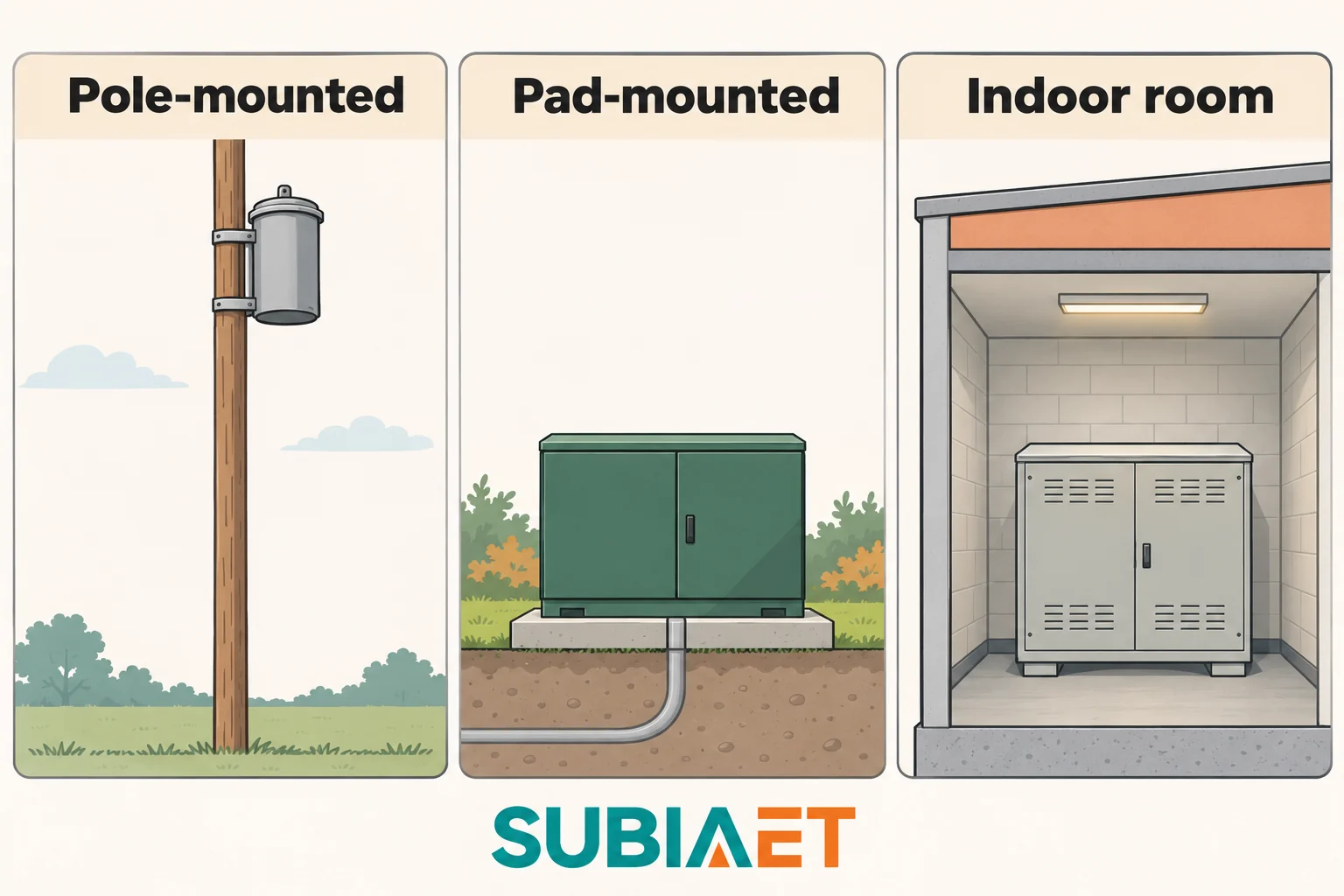
Two worked examples show how the four labels become a complete, unambiguous equipment description.
Example 1: Underground-fed commercial site
A commercial development served by a utility underground cable network needs to step medium voltage down to the building utilisation level. The site has a concrete pad outside the building near the service entry. The load is three-phase and the project has selected liquid-filled construction. The resulting description is: three-phase, liquid-filled, distribution, pad-mounted transformer. All four labels apply simultaneously, they do not conflict, and each eliminates ambiguity that the others leave open.
Example 2: Industrial building interior
A manufacturing plant needs a three-phase supply with a specified electrical separation requirement inside the building. With limited outdoor space, the project selects a ventilated indoor room and dry-type construction, subject to the applicable fire and environmental requirements. The correct description could be: three-phase, dry-type, isolation, indoor transformer. This description navigates immediately to a different equipment family than Example 1, even though both units are three-phase distribution-level equipment.
Having established the four-label description, the next questions are ratings and site constraints, not classification:
For the working principles of electromagnetic induction that underlie all transformer types, see What is an Electrical Transformer and How Does It Work. The SUBIA transformer range covers the main categories discussed here: oil-immersed transformers, dry-type transformers, pad-mounted transformers, single-phase transformers, and isolation transformers. For larger transmission and substation duty, see power transformers. The full transformer range entry is at subiapower.com/transformers/.
A four-label description is the starting point for a specification, not the end of it. It places the equipment in a relevant product family and helps identify which configurations to investigate before the detailed rating and site review.
Yes. Buried cables can rise through openings in the pad to reach the cable compartment. The cabinet and transformer stay above grade in this arrangement. Check the actual cable entry and site plan for a specific unit.
Both arrangements can transform voltage in a three-phase system when designed for the duty. A bank has three separate units and nameplates. An integrated three-phase transformer has a common assembly and nameplate. The choice can affect transport, site connections and spare-unit planning.
No. Some dry-type designs are open or ventilated and some use non-ventilated enclosures. Encapsulation describes how the winding is insulated. Check ventilation and the specified enclosure protection separately.